Tebet Eco Park: Where Nature and People Coexist in Perfect Harmony
Discover the magic of Tebet Eco Park, a stunning city park that emphasizes protecting the environment and fostering community involvement.
Overview
Tebet Eco Park is a lovely city park that strongly emphasizes protecting the environment and fostering community involvement. This stunning park, which is 7.3 hectares in size and is situated in South Jakarta, unites North Tebet Park and South Tebet Park into a single, well-balanced park with respect for the environment, society, education, and recreation.
Each zone of Tebet Eco Park is carefully designed to play an essential role in preserving the environment and promoting social interaction. The park features revitalized rivers and wetlands, which act as retention ponds, as well as the conservation of plants and replanting to reduce pollution. There are also plenty of open green spaces where visitors can enjoy the natural beauty and interact with each other.
Zones at Tebet Eco Park that you can explore:
a. Infinity Link Bridge
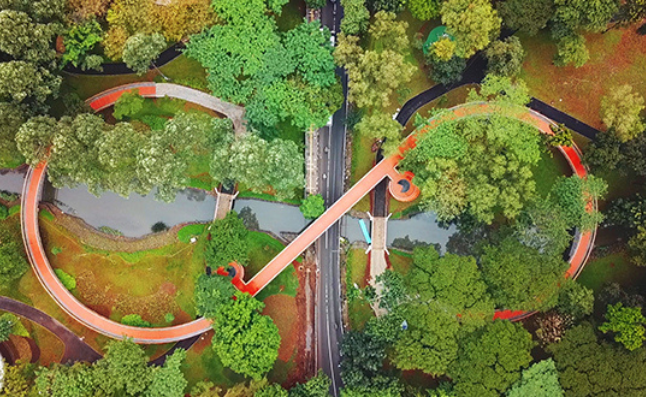
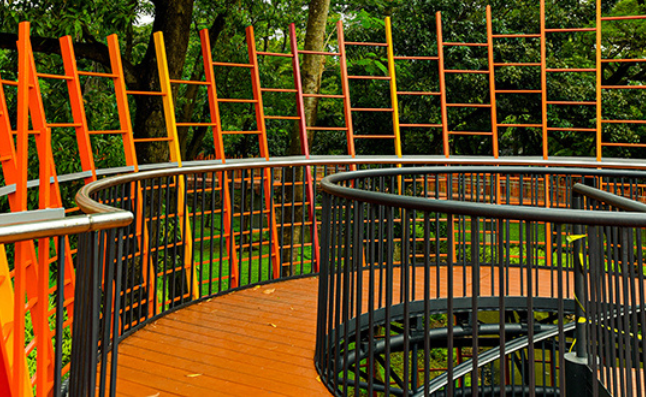
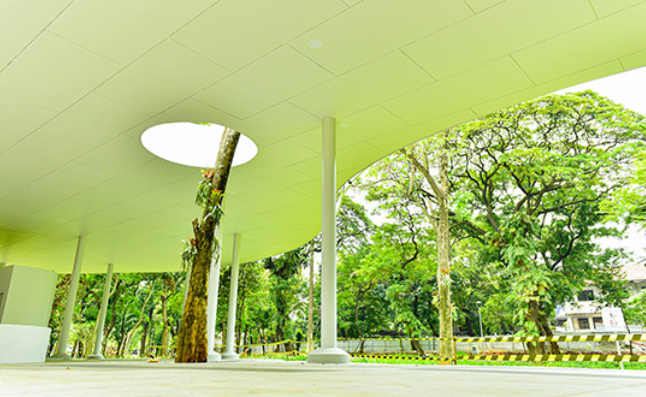
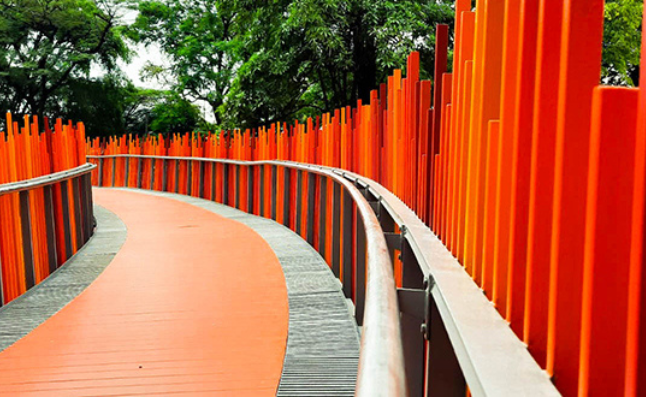
The Infinity Link Bridge is designed to connect the north and south parks previously separated by Jalan Tebet Timur. This six-meter-high bridge stands between towering existing trees, which makes the bridge seem to be hugged by a lush green canopy. The vegetation surrounding the Infinity Link Bridge is designed with various color tones inspired by the Leda tree (Eucalyptus deglupta Blume).
b. Community Garden
An area designed for the community to do activities/cultivation and for educational gardening activities for schools and the public. Various activities will always respond to the site’s existing conditions, which was previously a Nursery Garden. The repurposing of this seedling land as a gardening community zone is expected to increase the land’s value and usability for the surrounding community.
c. Children Playground
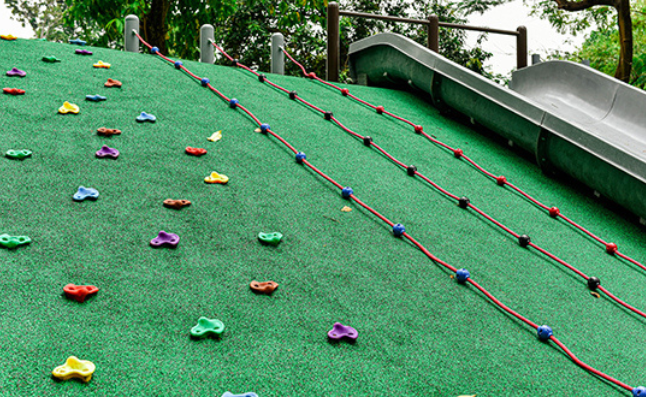
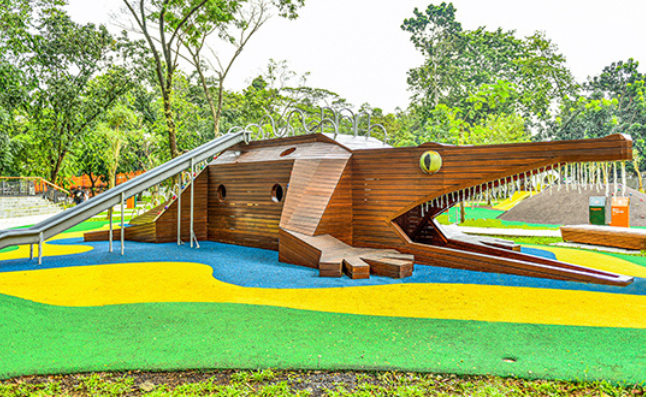
The Children’s Playground Zone takes advantage of significant contour differences between the site’s existing walls. This contour difference is used as a playground element in the form of an integrated slide.
d. Community Lawn
The community lawn uses an existing open space surrounded by butterfly flower trees (Bauhinia purpurea). The Community Lawn hosts more intimate and group-oriented public activities. This is adjusted by the design of turf mounds, which divide the large area into several smaller and private spaces while maintaining the landscape’s unity.
e. Forest Buffer
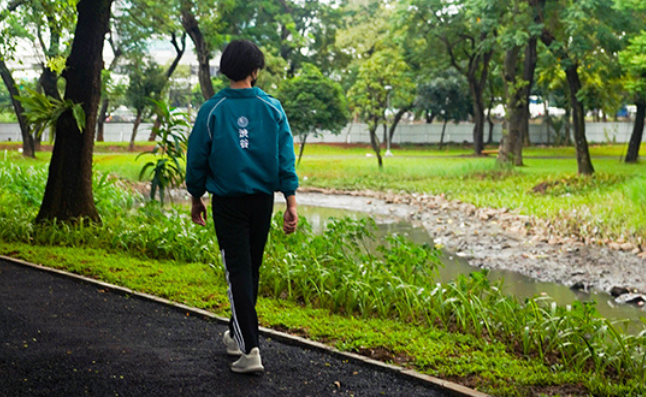
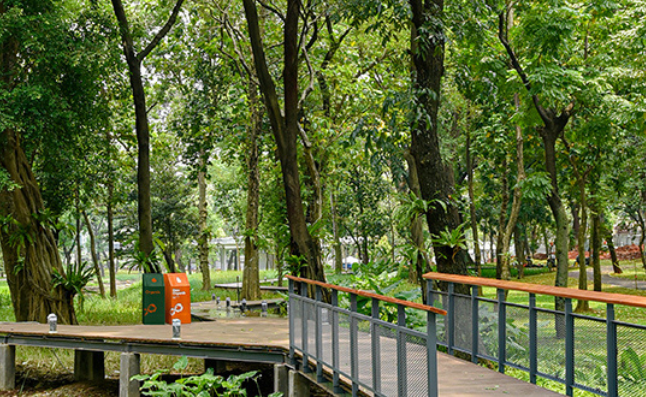
The Forest Buffer is a more tranquil area where you can stroll in the shade of trees and enjoy nature. Tree signage and exciting facts are provided to educate visitors. Forest Buffer is designed adjacent to the Community Garden as a support for social activities that are more relaxed and educational.
f. Plaza
It is a public facility that also serves as a landmark in the northern area of Tebet Park. This plaza is where to plant vendors can sell their wares.
g. Thematic Garden
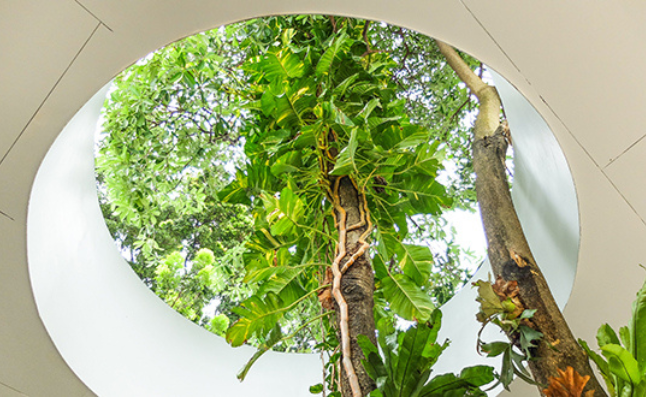
This zone, located under the Infinity Link Bridge, escorts and welcomes visitors going up/down from the Infinity Link Bridge. This park area is intended for art installations by local artists and is used as a photo spot. The circular floor pattern is used as an area for displaying fragrant plants and also as an area for art installations.
h. Wetland Boardwalk
Wetland is a pool of water that is an important ecological asset for Tebet Eco Park. This zone is a natural system designed for flood control and improving water quality by using plants that can support water purification so that the water from northern Tebet Park is clean.
Tebet Eco Park is more than just a park; it is a harmonious ecosystem where nature and people coexist and provide for one another. So visit Tebet Eco Park today and discover its magic!
Activity Highlight
What’s Included
Direct Impact
- Preserving the environment and community involvement
- Your self-development through fun & healing discoveries
Sustainability Commitment
The sustainability commitment from the revitalization of Tebet Eco Park is to protect the environment and promote inclusive social interaction. This is achieved through various design features such as revitalizing rivers and wetlands, conserving plants, replanting to reduce pollution, and creating open green spaces. The park aims to function as a harmonious ecosystem where nature and people coexist and provide for one another, thereby promoting environmental preservation and sustainability.